📱 The Buzz That Hooks Us
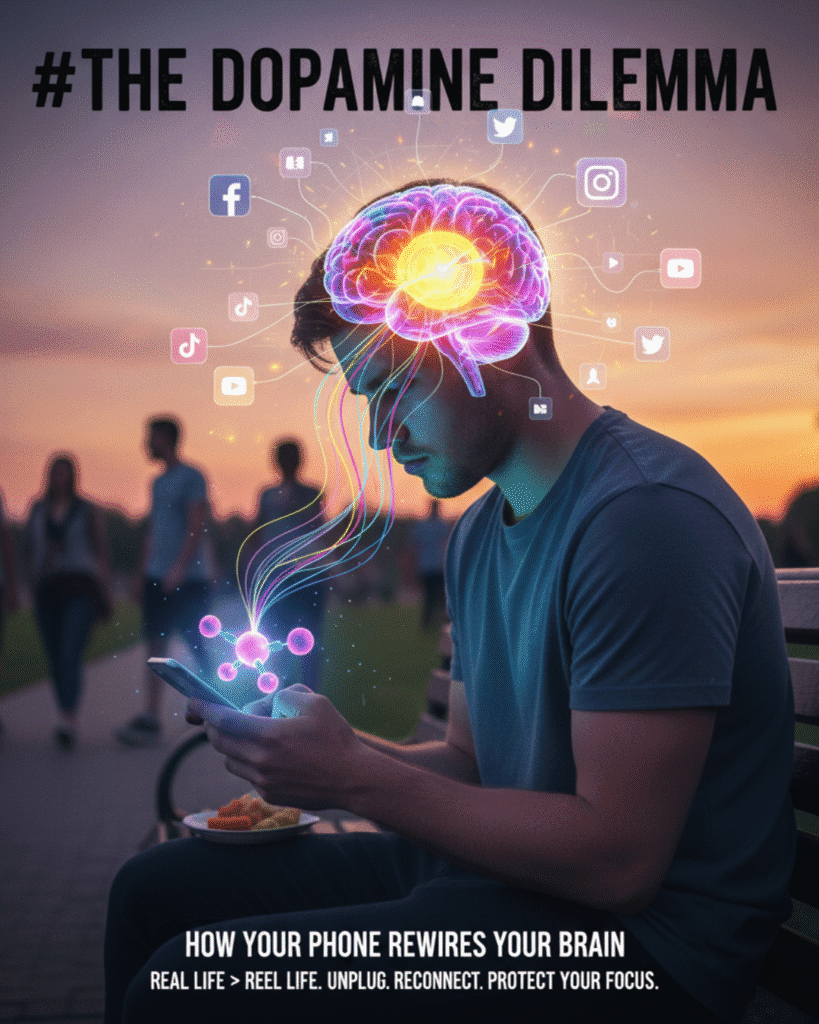
Your phone pings. You glance at the screen. One quick check turns into 30 minutes of scrolling. Sound familiar? That’s not just habit—it’s your brain’s chemistry at play.
🎯 Dopamine: The Brain’s Reward Chemical
Dopamine is nature’s motivator. It pushes us to eat, learn, and achieve. But social media “likes,” gaming rewards, and endless video feeds have hacked this system. Each notification gives a little dopamine hit, keeping us glued to our screens.
🧠 When Tech Mimics Addiction
Brain scans tell the story clearly. The *nucleus accumbens *—a key reward center—lights up during gaming or social media use, just like it does with drugs or gambling. Over time, the brain craves bigger doses of stimulation. That’s why “just one video” turns into an all-night binge.
😴 The Hidden Costs
This dopamine rollercoaster comes at a price:
- Poor sleep from late-night screen time
- Rising stress and anxiety
- Trouble focusing on real-world tasks
Teenagers are most at risk—their developing brains show changes in self-control regions, making it harder to put the phone down.
🌿 The Way Out: Rewiring Habits
The good news? We’re not powerless. Small steps can make a big difference:
- Digital detox: No screens an hour before bed
- Silence the noise: Turn off push notifications
- Mindful breaks: Pause before unlocking your phone
Therapies like CBT and mindfulness are showing promise in helping people reset their reward circuits.
🚀 Technology as a Tool, not a Trap
The problem isn’t technology—it’s how it hijacks our biology. By understanding dopamine’s role, we can take back control. The goal isn’t to ditch our devices but to use them wisely. After all, tech should empower us—not enslave our brains.